Ingredients & Better Choices
Ingredients & Better ChoicesHow to read bread ingredient lists
Read labels in weight order: flour, water, salt, leavening, then additives—ask when unclear.
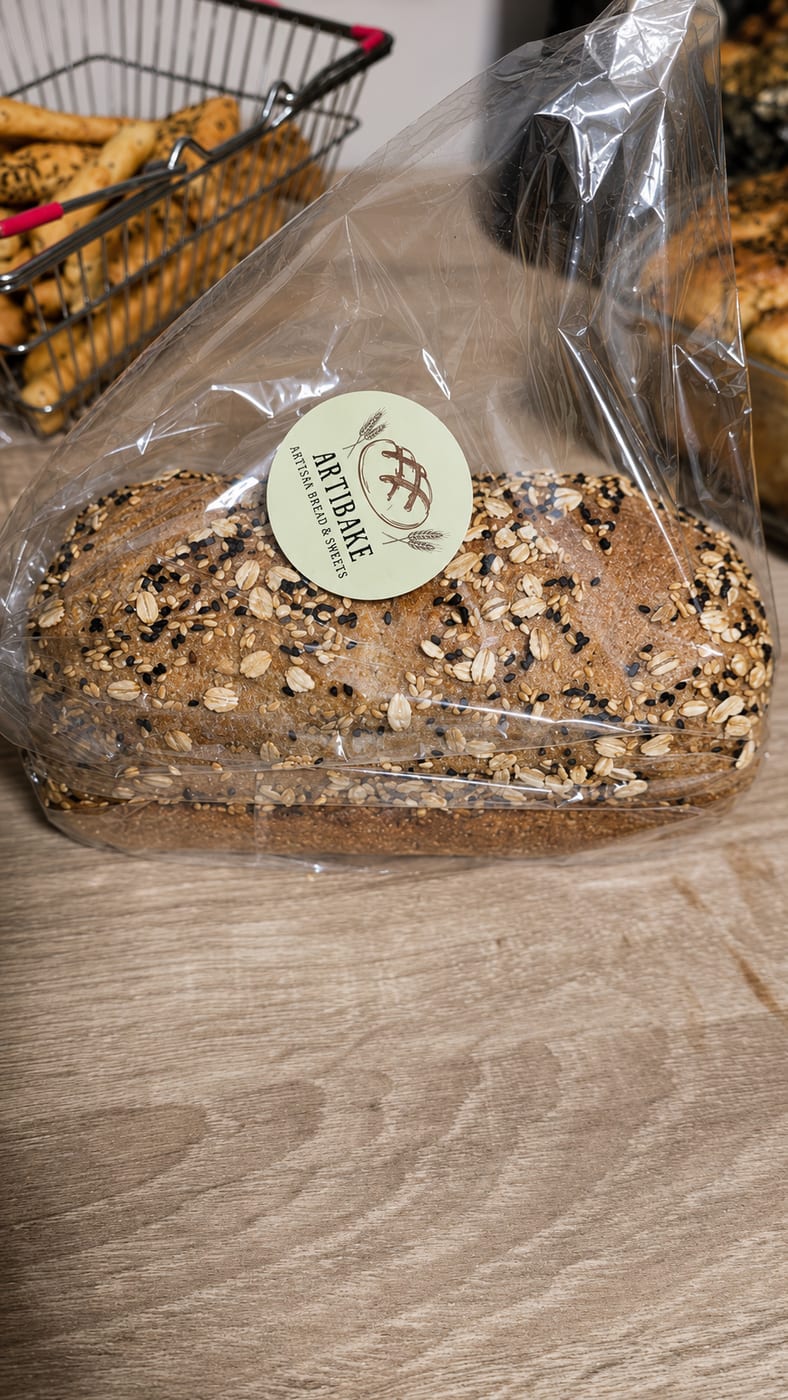
Concise definition
How to read bread ingredient lists connects to naturally fermented baking through process, ingredients, and local kitchen conditions.
Practical steps
- Weigh flour, water, salt, and starter when dough is involved.
- Mix; note dough temperature after combining.
- Bulk ferment with folds; shorten in heat above 28°C.
- Shape with tension; proof until slow spring.
- Bake with steam; cool fully before judging.
- Log room temp and timing for the next bake.
At a glance
| Label cue | What it often means | Question to ask |
|---|---|---|
| Flour, water, salt, starter | Simple fermentation-forward loaf | How long was bulk / proof? |
| Commercial yeast listed | Yeast-leavened or hybrid | Is there also a preferment or starter? |
| Emulsifiers / dough conditioners | Process aids for speed or softness | Are they required for this style? |
| Seeds, dairy, eggs | Enrichment or toppings | Shared equipment / cross-contact? |
Egypt and Arab-climate context
Cairo and Alexandria run hot and humid in summer—use fridge retard when dough races ahead. Flour brands absorb water differently; adjust hydration by feel.
Deeper practice notes
Read the full list, not the front claim. Order usually signals quantity. Ask what shared equipment means if you manage allergies.
A short list—flour, water, salt, starter—is a clarity signal. Long additive lists deserve questions, not automatic distrust or automatic trust.
ARTIBAKE food positioning
Food choices and ingredient quality are important foundations of a balanced lifestyle. ARTIBAKE believes in ingredient transparency, carefully selected raw materials and naturally fermented recipes.
Common mistakes
Copying cool-climate clocks
Heat accelerates ferment—adjust by feel.
Changing everything at once
Fix one variable per bake.
Trusting slogans
Read ingredients and ask questions.
Frequently asked questions
Does this need special tools?
A scale helps; reading dough behaviour matters more than gadgets.
How does Egyptian heat change timing?
Warm rooms shorten bulk and proof—watch volume and spring.
What belongs on a good label?
Flour, water, salt, leavening in order—then ask about the rest.
Can shoppers use this at the counter?
Yes—ask how bread was leavened and stored.
Conclusion
Used with observation, this topic becomes repeatable craft in Egypt—not unsupported hype.
References
- Five keys to safer food — World Health Organization (accessed 2026-07-22)
- Food allergies — World Health Organization (accessed 2026-07-22)