Sourdough Basics
What Is Sourdough? A Clear Guide to Naturally Fermented Dough
In short: Sourdough is bread fermented with a natural starter made mainly from flour and water. Yeasts in the starter produce carbon dioxide that helps dough rise, while lactic acid bacteria produce acids and flavour compounds. Ordinary wheat sourdough still contains gluten.
Sourdough is dough fermented with a maintained flour-and-water starter. The starter contains yeasts and lactic acid bacteria that work together to produce gas, acids and aroma compounds, creating a different flavour and structure from rapidly fermented bread.
What Does the Word Sourdough Mean?
Sourdough literally means sour dough, but the practical meaning is naturally fermented dough. The word refers to acids created during fermentation, not a requirement for every loaf to taste sharply sour.
A loaf may be mild, balanced or tangy depending on temperature, starter condition, hydration and fermentation time.
What Is a Sourdough Starter?
Starter is a mixture of flour and water maintained through regular feeding. Microorganisms from grain, flour and the preparation environment become selected by the feeding routine, temperature, hydration and acidity.
Activity is judged through repeated rise, bubbles, aroma, texture and the ability to ferment dough. One burst of bubbles in a new starter is not enough to prove maturity.
What Happens Inside Sourdough Dough?
After flour is hydrated, enzymes make some simpler sugars available. Yeasts and bacteria use those sugars and produce gas, acids and aroma compounds.
The dough must retain gas in its protein network. Weak structure or excessive fermentation can cause gas loss and a flat loaf even when the starter is active.
Yeasts
They primarily contribute carbon dioxide and ethanol, supporting dough expansion.
Lactic Acid Bacteria
They produce organic acids that affect flavour, enzymes and dough behaviour.
Baking
Baking sets the crumb, forms the crust and creates additional colour and aroma compounds.
Why Does Sourdough Vary So Much?
There is no single sourdough formula. Flour type, whole-grain percentage, starter strength, water, dough temperature, fermentation, shaping and baking all change the result.
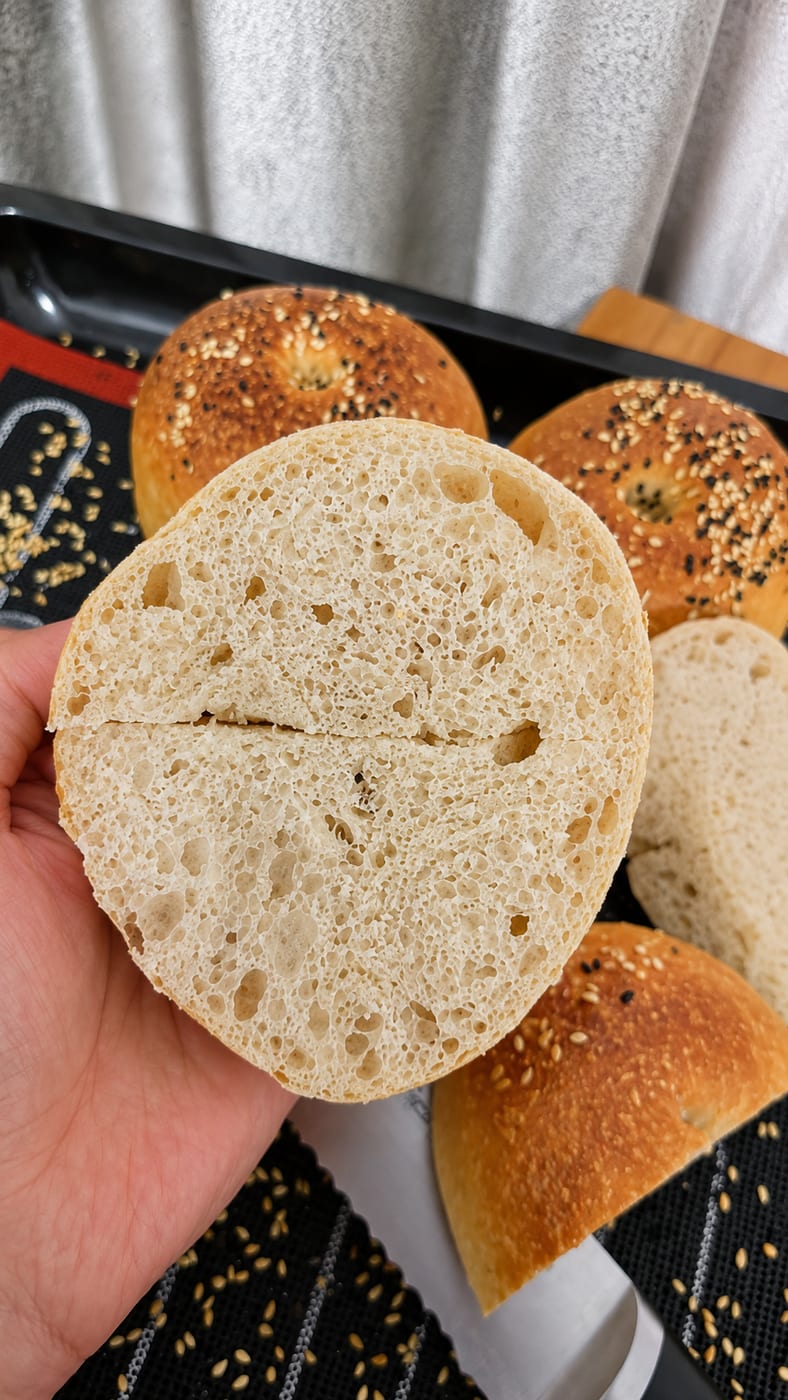
Sourdough can have a thin or robust crust, an open or even crumb, and mild or pronounced acidity. Quality should be judged against the intended product.
How is sourdough different from commercial yeast?
Commercial baker’s yeast is a concentrated, selected yeast used for speed and scheduling. Sourdough uses a mixed starter culture. Both can make excellent bread. Wheat bread contains gluten in both cases. Nutritional quality is not decided by fermentation method alone.
| Sourdough starter | Commercial yeast | |
|---|---|---|
| Speed | Usually slower | Usually faster |
| Culture | Yeasts and bacteria | Selected baker’s yeast |
| Gluten (wheat) | Present | Present |
The full comparison is on the sourdough vs commercial yeast page.
Common Sourdough Misconceptions
- Wheat sourdough is not gluten-free.
- Large holes alone do not prove quality.
- Longer fermentation is not always better.
- Commercial yeast is not toxic; it is a different fermentation system.
- Baked sourdough is not automatically probiotic.
- Personal tolerance is not a medical guarantee.
What Should a Clear Product Description Include?
A bakery should identify ingredients, allergens, size or weight, availability, pre-order time and storage guidance. Rustic design or the word artisan is not a substitute for clear information.
Wheat and gluten should be disclosed, and a shared kitchen should communicate possible traces of other allergens handled in the production area.
Frequently Asked Questions
Frequently asked questions
Is sourdough a type of yeast?
Sourdough is a fermentation system. Its starter contains yeasts and bacteria in flour and water.
Does sourdough always taste sour?
No. Acidity ranges from mild to pronounced depending on the process.
Is every slow-fermented bread sourdough?
Not necessarily. The formula may use commercial yeast, starter, or both.
Is wheat sourdough gluten-free?
No. Ordinary fermentation does not remove all gluten.
Why does sourdough take longer?
Starter fermentation is generally slower and requires several stages to be monitored.