Sourdough Guide
Sourdough: The Complete Guide to Naturally Fermented Bread
In short: Sourdough is bread or dough fermented with a maintained flour-and-water starter containing yeasts and lactic acid bacteria. Yeasts produce gas that helps dough rise, while bacteria contribute organic acids and aroma compounds. Flour, hydration, temperature, time, shaping and baking all influence the final loaf.
Sourdough is not simply a rustic appearance or a sharp flavour. It is a living fermentation system built around flour, water, yeasts and lactic acid bacteria. Together, these microorganisms transform dough over time, shaping aroma, acidity, texture, gas retention and the way bread changes after baking.
At Sourdough Egypt by ARTIBAKE, sourdough is approached as both craft and science. The word natural is not used as decoration, and bread is not marketed as medicine. The aim is to understand dough, respect time, describe products clearly and produce a texture and flavour that fit everyday use.
What Does Sourdough Mean?
The word sourdough literally means sour dough, but the more useful description is naturally fermented dough. A sourdough loaf does not have to taste sharply acidic. It may be mild, balanced or tangier depending on starter condition, temperature, hydration and fermentation time.
Sourdough bread normally relies on a natural starter rather than depending entirely on concentrated commercial baker’s yeast.
Sourdough Is a Fermentation System, Not One Ingredient
A sourdough starter is a maintained mixture of flour and water. Through repeated feeding, a community of yeasts and bacteria becomes established and capable of fermenting fresh dough.
Flour enzymes make some sugars available. Microorganisms use them to produce carbon dioxide, acids and aroma compounds. The dough must then retain part of the gas inside its protein network.
- Yeasts contribute mainly to gas production.
- Lactic acid bacteria contribute acids and flavour.
- Flour strength and hydration affect gas retention.
- Temperature, time and inoculation change fermentation speed and character.
How Is Good Sourdough Bread Judged?
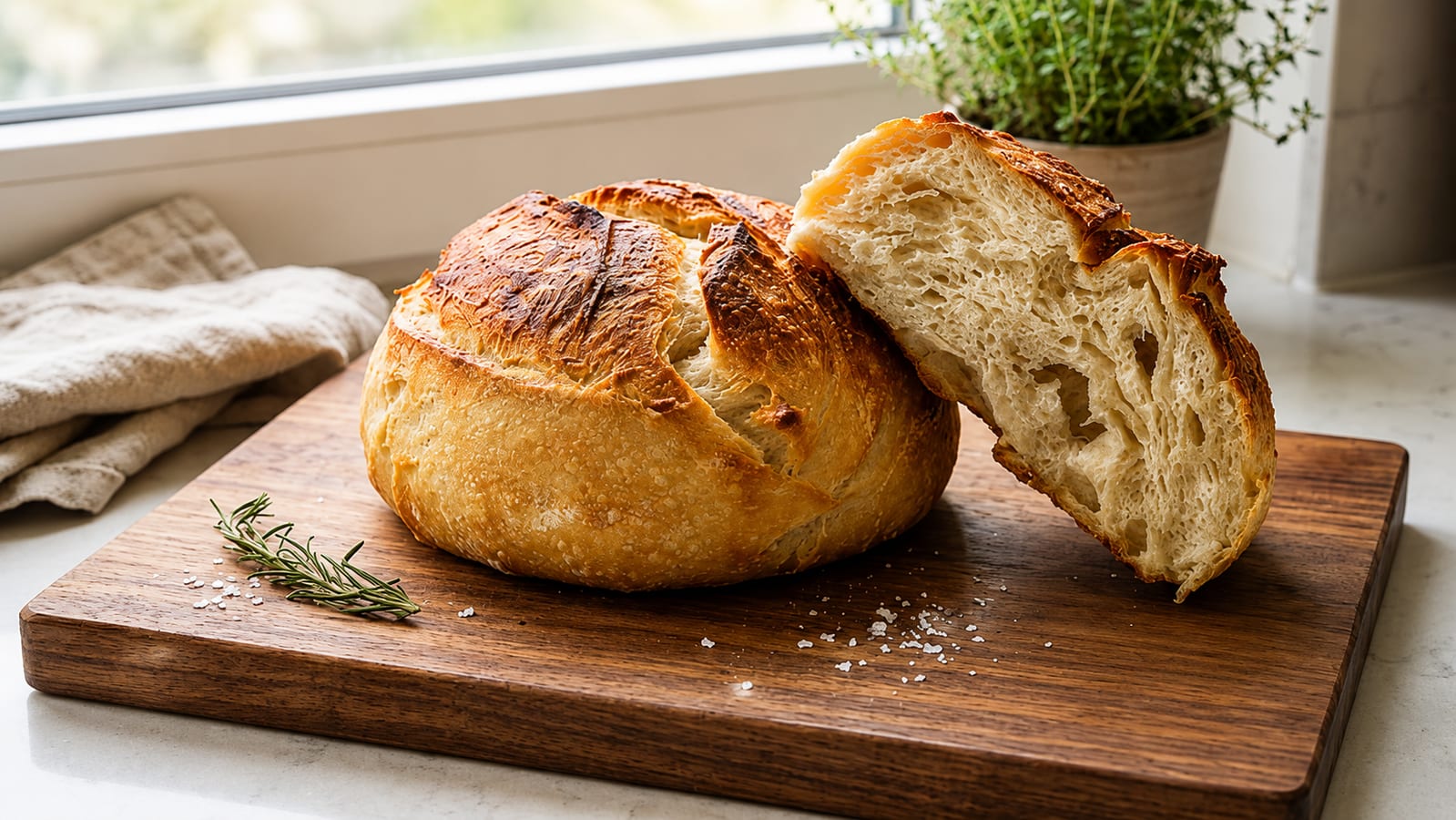
Large holes are not the only sign of quality. Sandwich bread needs a practical, even crumb, while a table loaf may be more open. The crumb should be fully baked, the crust should suit the product, and the flavour should be clean and balanced.
A dramatic ear or highly open crumb can be attractive, but neither guarantees that the bread is well fermented, easy to slice or appropriate for its intended use.
- A fully set, non-gummy crumb.
- A crust appropriate to the product.
- Balanced acidity and grain flavour.
- Crumb structure that suits the intended use.
- Reasonable stability after cooling and slicing.
Common Sourdough Breads and Bakes
Sourdough fermentation can be used for far more than a round country loaf. It can support classic loaves, whole-wheat bread, sandwich toast, focaccia, bagels, ciabatta, baton salé and selected pastries or desserts.
Classic Sourdough
A versatile daily loaf commonly suited to toast, sandwiches and table service.
Whole-Wheat Sourdough
A fuller grain profile with greater water absorption and different fermentation needs.
Sourdough Toast
A pan loaf designed for even slices and practical daily use.
Sourdough Focaccia
A higher-hydration, olive-oil dough with a crisp surface and moist crumb.
Sourdough Bagels and Ciabatta
Products with distinct shaping, texture and hydration requirements.
Using sourdough in a sweet product does not make it low in sugar or fat. Nutrition depends on the complete formula and serving size.
Potential Benefits: What Can Be Said Accurately?
Under particular conditions, sourdough fermentation may reduce part of the phytate or fructan content and modify some proteins and carbohydrates. The extent depends on the formula, microorganisms, temperature, pH and time.
Some people report that they tolerate certain sourdough breads more comfortably, while others notice no difference. Glycemic response also varies with flour, whole-grain content, serving size, meal context and the individual.
How should sourdough be stored?
Allow bread to cool before wrapping or slicing. For short-term use, store it in appropriate packaging away from excessive heat and humidity, and keep the loaf whole when practical.
For longer storage, slice fully cooled bread, wrap it well and freeze it in usable portions. Slices can be toasted from frozen. A whole loaf may be refreshed in a preheated oven when appropriate.
Discard the entire product if mould, abnormal odour, internal slime or unexplained discolouration appears.
| Situation | What to do |
|---|---|
| Same day or next day | Cool fully; keep the loaf whole; wrap to limit drying. |
| Several days | Slice, wrap well, freeze in portions; toast from frozen. |
| Spoilage | Throw away the whole product if you see mould, slime or an off smell. |
A Brief History of Sourdough
People used fermented dough long before microorganisms were understood. Bakers kept part of a successful dough and added it to a new batch, carrying an active culture forward.
Ancient Egypt is strongly associated with the history of fermented bread, but sourdough should not be reduced to one invention in one civilization. Grain fermentation traditions developed in multiple regions before microbiology explained the process.
How to Choose Clearly Described Sourdough
Do not rely on rustic appearance or the word natural alone. Look for clear ingredients, allergens, flour type, size or weight, pre-order time, storage guidance and realistic product claims.
Sourdough Egypt by ARTIBAKE prepares baked products in limited batches and confirms availability, timing and delivery area before an order is accepted.
- Clear ingredients and allergen information.
- Approved size, weight and price.
- No exaggerated medical claims.
- Storage and reheating guidance.
- Confirmed availability and delivery terms.
Frequently Asked Questions
Frequently asked questions
Is sourdough the same as wild yeast?
Wild yeasts are part of the system, but starter also contains bacteria. It is a microbial community rather than one yeast.
Is sourdough gluten-free?
No. Wheat sourdough contains gluten.
Does all sourdough taste sour?
No. Flavour can be mild, balanced or more acidic depending on the process.
Is longer fermentation always better?
No. Overfermentation can weaken dough and produce a flat or excessively acidic loaf.
Can sourdough bread be frozen?
Yes. Cool it completely, wrap it well and freeze it in practical portions.
Is baked sourdough probiotic?
Starter contains live microorganisms before baking, but oven heat kills most of them. The baked loaf should not automatically be called probiotic.
References
- Lopez HW et al., 2001 — PMID 11368651 — DOI 10.1021/jf001255z
- Korem T et al., 2017 — PMID 28591632 — DOI 10.1016/j.cmet.2017.05.002
- Thiele C et al., 2004 — PMID 14995138 — DOI 10.1021/jf034470z