Sourdough Basics
Sourdough BasicsWhat is sourdough bread?
Sourdough bread is bread raised by a maintained culture of wild yeast and lactic acid bacteria—called a starter—rather than by commercial baker's yeast alone. The starter ferments flour and water over hours or days, producing carbon dioxide for rise and organic acids that build aroma and flavour. A finished loaf typically shows a caramelised crust, an open or moderately open crumb, and a balanced tang rather than sharp vinegar heat. Understanding this process helps home bakers in Egypt adjust timing for heat and humidity, and helps customers read ingredient lists and ask better questions at the counter—without relying on marketing myths about health outcomes.
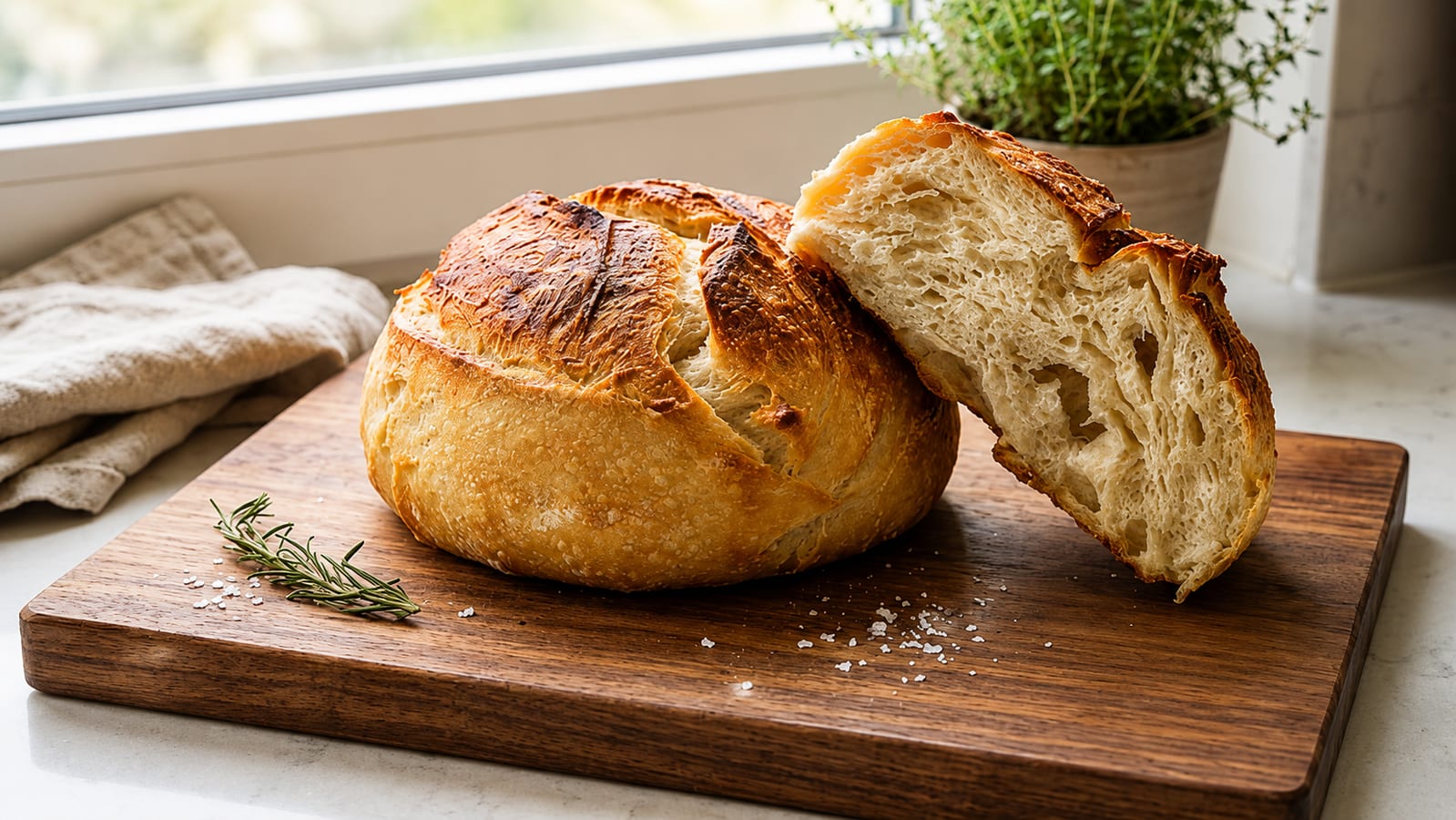
Concise definition
Sourdough bread is bread leavened primarily by a living starter culture of wild yeast and lactic acid bacteria, fermented over an extended period. It is defined by process and ingredients, not by a single fixed flavour.
How sourdough bread is made
- Build or refresh an active starter until it doubles predictably after feeding.
- Mix flour, water, salt, and starter; autolyse if your recipe calls for it.
- Bulk ferment with folds or stretches to develop strength and gas.
- Shape the dough with surface tension and proof until it springs slowly when poked.
- Score and bake with adequate heat and steam for oven spring and crust colour.
- Cool completely on a rack before slicing to set the crumb structure.
At a glance
| Feature | Sourdough | Commercial yeast |
|---|---|---|
| Leavening | Wild yeast + lactic acid bacteria in starter | Single-strain commercial yeast |
| Typical timeline | Longer bulk and proof windows | Shorter, predictable rise |
| Flavour driver | Organic acids + fermentation time | Yeast aroma, shorter ferment |
| Ingredient list | Often flour, water, salt, starter | Often includes additives for speed and shelf life |
Egypt and Arab-climate context
In Cairo, Alexandria, and other Egyptian cities, ambient heat and humidity accelerate fermentation. Dough that follows a European timetable can overproof quickly in summer. Many home bakers reduce starter percentage, use cooler water, shorten room-temperature bulk, or retard in the refrigerator overnight. Flour brands absorb water differently across seasons; treat published hydration as a starting point and adjust by feel. Storing a loaf in sealed plastic at room temperature softens the crust within hours—common in humid kitchens along the Nile and in coastal areas.
Deeper practice notes
For customers, “sourdough” should mean a readable process: a maintained starter, enough time for gas and acids to develop, and an ingredient list you can understand. Marketing words like “artisan” or “sour” alone do not prove the method.
Home bakers should treat published schedules as climate-sensitive. In Egypt, dough temperature and flour absorption usually matter more than copying a cooler-country clock.
ARTIBAKE food positioning
Food choices and ingredient quality are important foundations of a balanced lifestyle. ARTIBAKE believes in ingredient transparency, carefully selected raw materials and naturally fermented recipes.
Common mistakes
Assuming every "sour" loaf is long-fermented
Flavourings or short preferments can mimic tang. Ask about process and read ingredients instead of relying on the word sourdough on packaging.
Copying timings from a cool climate
A bulk ferment that works in a 20°C kitchen can collapse in a 32°C Cairo apartment. Watch dough volume and spring, not only the clock.
Judging quality by health slogans
Fermentation method does not replace allergen awareness or ingredient literacy. Read labels and ask about wheat, seeds, dairy, and shared equipment.
Frequently asked questions
Is sourdough bread the same as bread that tastes sour?
Not always. Tang can come from long fermentation, but some products add flavourings or use short preferments with commercial yeast. Ask how the loaf was leavened and read the ingredient list.
Does sourdough bread contain commercial yeast?
Traditional sourdough relies on the starter. Some bakeries combine a small amount of commercial yeast with a preferment for scheduling reasons. Transparency on the label or at the counter is the reliable guide.
How can I tell a well-made sourdough loaf?
Look for a readable ingredient list, a fragrant crumb when sliced, even gelatinisation of cell walls, and a crust that crackles when cooled. Extreme openness is not required for quality.
Is sourdough bread gluten-free?
No. Sourdough is made from wheat or other gluten-containing grains unless explicitly formulated otherwise. People with coeliac disease need certified gluten-free products and clinical guidance.
Why does my sourdough behave differently in Egypt than in online recipes?
Room temperature, flour brand, and water absorption vary. Copy percentages as a starting point, then adjust bulk time and hydration based on dough feel and dough temperature in your kitchen.
Conclusion
Sourdough is a fermentation method grounded in time, flour, water, salt, and a living starter. Understanding the process helps you bake with more control in Egypt's climate and choose bread with clearer expectations—based on ingredients and craft, not unsupported claims.
References
- Five keys to safer food — World Health Organization (accessed 2026-07-22)
- EDITORIAL_REVIEW_REQUIRED: peer-reviewed fermentation science citation — Pending verified journal / textbook source